

Residential Solar
Explore rooftop solar for houses, including how roof space, electricity use, shading and future plans for EV charging or electric heating affect system design.
Explore Domestic Solar →Thinking about generating your own electricity? DomElec helps homeowners and businesses across North Wales explore solar installations that make sense for their properties, energy use and budgets.
From Wrexham and Flintshire to the North Wales coast and beyond, good solar design starts with understanding the building, not with a one-size-fits-all package. We bring a practical, straightforward approach from our base in Llay, Wrexham.
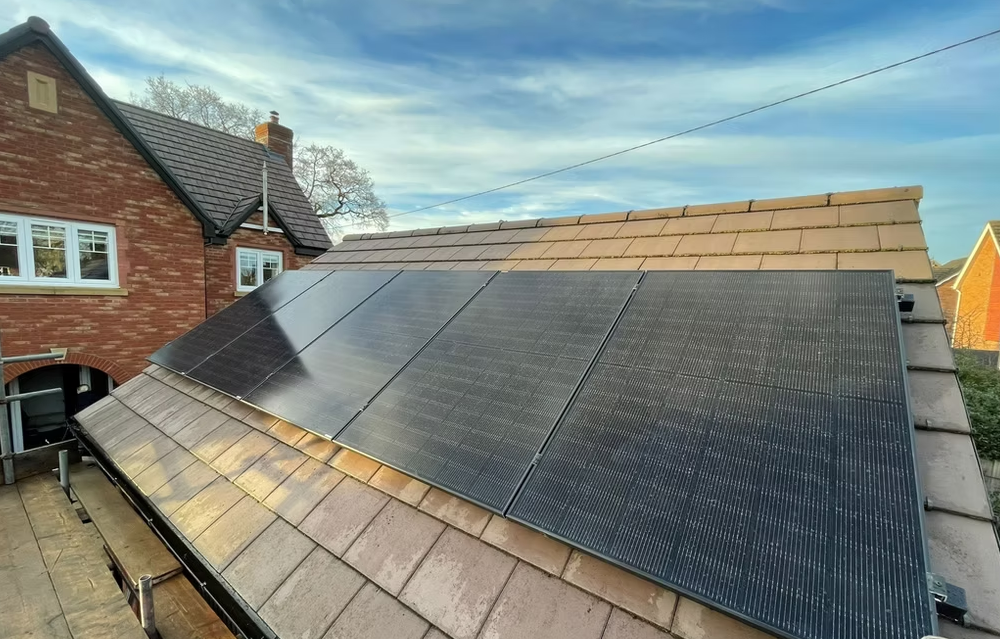 Solar systems designed around your property
North Wales offers no single template for solar panels. A detached house outside Mold, a coastal property near Colwyn Bay and a warehouse in Deeside can all benefit from solar electricity, yet the practical considerations and reasons for investing are different.
For a home, it may be about reducing grid electricity purchases and making better use of power during the day. For a workplace, it may be about offsetting demand while staff, machinery or refrigeration are operating. For rural properties, available roof space may be generous, while the roof condition, electrical connection or surrounding shade needs closer attention.
That is why the starting point is a conversation about your building, priorities and electricity use. If you already know whether you need panels for a house or business premises, visit our residential solar or commercial solar pages for the detailed service information.
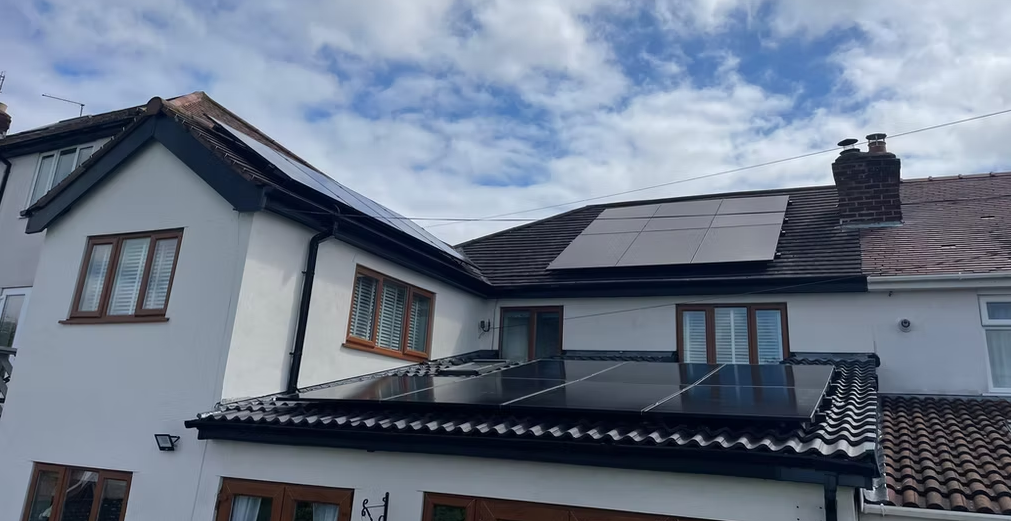
Different properties need different answers. Here is a quick way to find the right information before requesting a property-specific assessment.
Explore rooftop solar for houses, including how roof space, electricity use, shading and future plans for EV charging or electric heating affect system design.
Explore Domestic Solar →Understand solar for offices, workshops, factories, agricultural buildings and other premises where daytime demand can make on-site generation particularly useful.
Explore Business Solar →See how storage can complement solar panels or existing systems by holding surplus electricity for later use, subject to the property and equipment chosen.
Explore Battery Storage →Interest in solar is supported by measurable installation activity, rather than assumptions about sunshine. In its 2026 analysis, Energy Saving Trust compared domestic installations with local authority populations, using installation data from the MCS dashboard and population figures from official statistical sources, including the ONS.
Anglesey recorded the highest rate in the UK in that analysis, demonstrating that a Welsh location with changeable weather can still see significant uptake.
The figures below cover five North Wales local authorities for which the analysis published comparable data. They show adoption, not the performance or likely savings of an individual installation.
Ynys Môn (Anglesey) topped Energy Saving Trust's 2026 UK domestic solar adoption comparison.
This is a measure of installations relative to population, not a predicted generation figure.
View the Energy Saving Trust research| North Wales Local Authority | Domestic Solar Installations per 10,000 People |
|---|---|
| Isle of Anglesey (Ynys Môn) | 649 |
| Gwynedd | 390 |
| Denbighshire | 358 |
| Flintshire | 267 |
| Conwy | 259 |
Source: Energy Saving Trust, Solar Panel Hotspots 2026. The methodology uses MCS installation records and official population data. This is a selected five-area comparison, not an exhaustive list or a live installation count.
For someone considering an installation, the stronger lesson is that suitability is local to the property, not simply the county. Roof orientation, available space, shade, electricity use and the proposed equipment matter more than a postcode alone.
That is why annual generation estimates should be prepared for the individual building.
Our Wrexham base provides a practical starting point for enquiries across the region. The six principal local authority areas have varied housing, commercial buildings and access conditions, so a proposal should reflect the actual site instead of relying on interchangeable town-page claims.
Coverage and survey arrangements will depend on the project and site location. If your property is in a more remote area, the first step is simply to share the postcode and a little information about the roof or premises.
We can then discuss what assessment would be appropriate. The same practical approach applies whether the building is a modern house, a traditional property or commercial premises.
Roof suitability: The age, structure, covering and available space all need consideration. A roof should be assessed for its ability to accommodate the proposed mounting system, including access for installation and future maintenance.
Orientation and shade: Panels need not face perfectly south to be useful. The question is how the proposed layout will perform across the year, taking account of surrounding buildings, trees, chimneys and other obstructions.
How and when power is used: Electricity consumed while panels generate can reduce the amount bought from the grid. A home with evening demand may have different priorities from a daytime-operating workshop.
Electrical and network considerations: Inverter selection, cable routes, the existing electrical installation and any relevant distribution network requirements form part of a safe, workable proposal.
Clear financial assumptions: A forecast should distinguish annual generation from the electricity likely to be used on site, and from any energy exported. The value of each depends on actual tariffs and usage patterns.
There is rarely a useful single number that proves solar will work for every property. A proper assessment brings these factors together to produce a system size, layout and forecast appropriate to the location.
Tell us where the property is, what kind of roof or building it has, and what you want solar to achieve. Recent electricity use is a helpful starting point.
The roof, access, shading and electrical arrangements are reviewed so that avoidable issues can be identified before a system specification is settled.
Discuss equipment, expected annual generation, storage options where relevant, practical installation arrangements and the assumptions behind the financial figures.
Once a project proceeds, the installation should be tested and commissioned, with system information, monitoring guidance and relevant documentation explained clearly.
Completed projects can explain more than generic promises. Roof shape, mounting decisions, electrical arrangements and customer goals become easier to understand when they are shown through actual work. DomElec already has published examples relating to Wrexham and Mold.
Our published project examples offer a closer look at the decisions behind individual installations and how each building influenced the solution.
If you are comparing installers, ask to see projects that resemble your property and discuss what was different about the design.
Read a Wrexham-area solar case study and explore the Mold installation page.
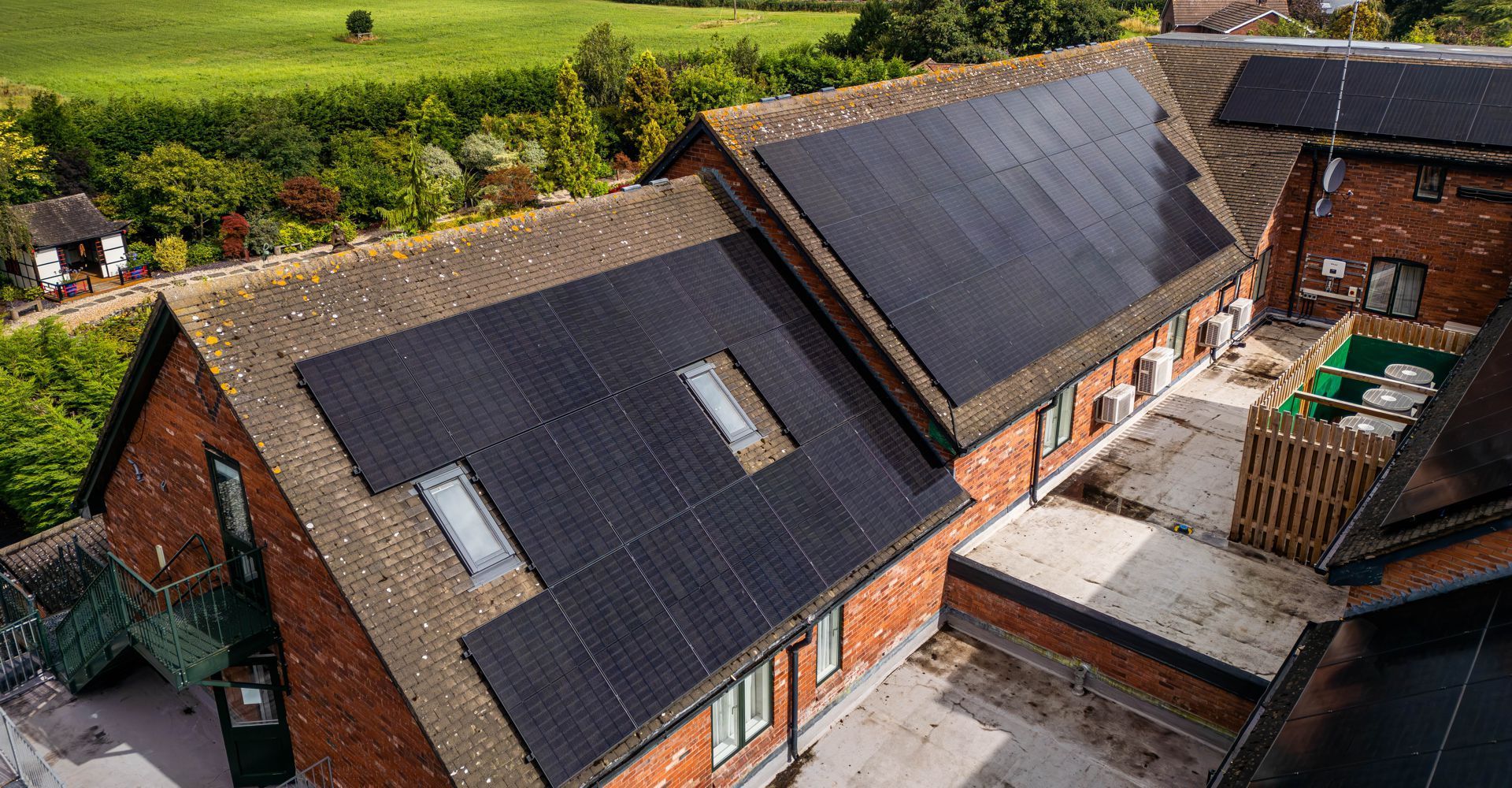
Many solar installations on houses in Wales fall within permitted development rules, although exceptions and conditions apply. Listed buildings, flats, conservation areas, unusual installations and non-domestic properties may need additional checks.
For the latest position, use the Welsh Government's domestic solar planning guidance rather than assuming English planning rules are the same.
If an eligible system exports electricity to the grid, the Smart Export Guarantee may provide export payments through a participating supplier.
The amount received depends on the export tariff and the volume exported; it is different from the bill savings associated with using solar electricity directly.
A system that generates well during a bright afternoon may produce substantially less during the shortest winter days.
What matters financially is the annual pattern of generation, how it aligns with demand and what the property pays for electricity bought from the grid.
Energy Saving Trust's consumer guidance discusses a typical 4.5 kWp domestic installation costing around £7,600 in its 2026 figures, but a local quotation may differ materially depending on the roof, equipment and scope.
Savings and payback should never be guaranteed from that national example. For a practical starting point, read the Energy Saving Trust solar panels guide, then compare its assumptions with the details of your property and a tailored quotation.
These are general questions people ask when researching solar installation in Wales. The answers explain the principles and practical considerations, without replacing a property survey or current advice from the relevant authority.
Yes. Solar photovoltaic panels generate electricity from daylight rather than heat, so they can still produce power on overcast days in North Wales. Output is normally lower beneath thick cloud and during short winter days, but a system is assessed across the whole year, not only in perfect summer weather. The orientation of the roof, shading, panel specification and quality of installation all affect the amount generated. A sensible quotation should include a property-specific annual generation estimate, with seasonal variation explained.
North Wales has a wide range of conditions, from exposed coastal properties to sheltered inland streets and hillside homes. None of these automatically rules out solar. A south-facing roof may offer a favourable annual yield, but east- and west-facing layouts can also be useful, particularly when their generation better matches morning and late-afternoon electricity demand. Shading from neighbouring buildings, chimneys, trees or surrounding land is often more significant than the region's reputation for rain. An installer should assess those obstructions instead of assuming that every roof in the same postcode will perform alike. Modern solar panels can generate electricity under diffuse daylight, although prolonged overcast weather will reduce output. Winter generation is generally much lower than summer generation because days are shorter and the sun sits lower in the sky. Your proposed system should therefore come with a realistic annual estimate, not a promise that every month will deliver equal savings. Use that forecast alongside your electricity consumption and tariff to decide whether the investment meets your expectations.
Many roof-mounted solar panel installations on houses in Wales are treated as permitted development, meaning a separate planning application is not normally required when the relevant conditions are met. Exceptions can apply to listed buildings, properties in sensitive locations, certain roof arrangements and installations that fall outside the permitted limits. Flats and non-domestic buildings can be subject to different requirements. Always check the rules for the actual property rather than relying on general UK advice, because planning regulations in Wales are not identical to those in England.
The Welsh Government's published guidance says that many solar panels fitted to the roof of a single dwelling house are likely to qualify as permitted development. It also specifies conditions concerning siting, roof projection and the appearance of the building. Listed buildings, conservation areas and other protected settings may require additional consent; the exact position depends on the building and the proposal. Special consideration may also be needed for flat roofs, ground-mounted arrays, buildings with unusual rooflines and homes where permitted development rights have been removed. If you own a flat, have shared ownership of a roof or live in a property with restrictions, seek guidance from the local planning authority before committing to the installation. For businesses, agricultural buildings and larger systems, check the separate non-domestic requirements and any grid connection obligations. Planning permission and electrical compliance are different questions, and approval under one does not remove responsibilities under the other. The safest approach is to establish any restrictions at survey stage, document the intended design and obtain the required permissions before work begins.
The price of solar panels depends on system size, the equipment selected, roof access, electrical work and whether battery storage is included. As a national reference rather than a DomElec quotation, Energy Saving Trust's 2026 guidance gives an indicative cost of around £7,600 for a typical 4.5 kWp domestic system. A useful quotation should show the proposed capacity, key components, access costs, estimated annual generation, warranties and any additional work. It should explain assumptions clearly rather than quoting a guaranteed saving or fixed payback period.
Two North Wales properties can require very different installations even when their roofs look similar from the road. One may have easy access and a simple electrical connection; another may need scaffolding, extra roof preparation, a more complicated cable route or upgrades identified during the survey. Panel performance, inverter choice, monitoring options and whether you want a battery can all change the overall price. A transparent quotation should itemise the scope of work, give the system capacity in kilowatt-peak (kWp), identify the main products and describe how the panels will be mounted. It should also show predicted annual generation in kilowatt-hours (kWh), explain the assumptions behind any financial illustration and clarify what happens if unforeseen issues are found. Ask whether grid connection paperwork, testing, commissioning, documentation and aftercare are included. Comparing quotes solely on total price can be misleading if one proposal has allowed for work that another has omitted. For a fair comparison, assess the specification, forecast, workmanship arrangements and lifetime support alongside the initial investment.
No. Solar panels can work without a battery, and many properties will benefit from using solar electricity directly during daylight hours. A battery can store some surplus generation for use later, but whether it represents good value depends on your household or business demand, electricity tariff, battery price and proposed system size. It should be considered as an option, not an automatic requirement. If you use substantial electricity in the evening or want greater control over when you import from the grid, storage may be worth investigating.
Without storage, electricity generated by the panels is used by the property first, as long as suitable demand exists at that moment. Surplus electricity may be exported, subject to the installation and metering arrangements. A battery changes that pattern by storing some energy that would otherwise be exported, potentially reducing later purchases from the grid. However, batteries have finite usable capacity, conversion losses, operating limits and their own purchase and installation cost. The right size is therefore linked to how much surplus solar electricity is available and what the property actually needs after sunset. Someone working from home may already use a high proportion of generation without storage. A household with evening demand, or a business with a specific load pattern, may gain more from a carefully sized battery. Time-of-use tariffs can also influence the calculation, and backup operation should never be assumed unless the system is specifically designed and configured for it. Examine the numbers with and without storage before making the decision. See the dedicated battery storage page for a closer look at equipment options.
Look for an installer who surveys the property, explains the design in plain English and bases performance estimates on your actual roof and electricity use. Check relevant certification and consumer protection arrangements, ask what is included in the quotation and find out who will complete the electrical work and provide aftercare. A credible installer should discuss limitations as well as benefits, including shading, seasonal output and possible roof or grid restrictions. Local examples of completed installations are useful, especially where the property is comparable to your own.
Start by asking how the company will assess the roof's condition, available space, orientation, shading, wiring and consumer unit. A proper design should describe why particular panels and an inverter have been proposed, rather than presenting a generic package that is identical for every house. Where relevant, verify MCS certification through the official MCS directory and ask about the consumer code, insurance, product warranties and workmanship protection that apply to your agreement. Find out whether the team will manage any necessary electricity network notification or application, and what paperwork you will receive after commissioning. It is also worth asking how monitoring works, who you contact if performance appears abnormal and how warranty claims are handled. Customer reviews can provide context, but evidence of completed projects and a thorough written proposal are more useful than a large number of marketing promises. Finally, compare predicted output and financial assumptions on a like-for-like basis. The strongest quotation is not necessarily the one with the lowest headline price; it is the one that makes the scope, expected performance and responsibilities clear.
Potentially, yes. In Great Britain, the Smart Export Guarantee (SEG) allows eligible small-scale generators, including qualifying solar PV installations, to receive payments for electricity exported to the grid. Eligibility, metering requirements and tariff rates depend on the scheme rules and the supplier's offer. You do not necessarily have to use your existing import supplier for export payments. However, the value of an export tariff can change, so it should not be treated as a fixed long-term income or as a guaranteed return on installation costs.
The Smart Export Guarantee is administered through participating electricity suppliers under rules set by Ofgem. Eligible generators can apply for an export tariff, with payments linked to measured exports rather than all electricity produced by their panels. This distinction matters because electricity used directly in the property is not exported; its value instead comes from reducing grid purchases at the applicable import rate. To assess potential financial benefit, consider both components separately: avoided imports and paid exports. You should also check which documents and metering arrangements a supplier needs before it will accept an application. Some tariffs have additional conditions, such as requirements relating to other services, equipment or the energy supplier used for imports. Consequently, a rate advertised today may not be available to every installation or remain unchanged indefinitely. Ask for projections that state the assumed export rate and explain how changes would affect the outcome. Ofgem publishes guidance for generators and a list of SEG suppliers, making those the appropriate starting points for checking the scheme rather than relying on an installer or comparison website alone.
Whether you're looking at solar for a home in Wrexham, a commercial roof in Flintshire or a property elsewhere in North Wales, the starting point is a conversation about your goals, building and electricity use.
No generic savings promises: just a practical discussion of what to consider next.









DomElec Electrical & Solar Ltd.
Unit 3, Aerial Road Industrial Estate,
Llay, Wrexham
LL12 0TU
© Copyright 2026 DomElec Electrical & Solar Ltd. All Rights Reserved.